

Dogs can’t communicate with words like we do, but they are speaking all the time, but in a different way. They communicate through body language, using their eyes, tails, mouth, muscles, their full body & sometimes with sound. They are sometimes very subtle that humans don’t even notice. Most dogs can pick up on other dogs signals, but like human to human communication, we don’t always get what the person is saying to us either. Early interaction with other dogs is important in helping them to understand how to interact with each other.

Years ago I took a 12 week course on dog body language & it was very educational, but I wish I could find a similar class & do it again. There was so much to learn & pay attention to when watching dogs interact with other dogs & humans. The owners of the place I took the class from moved out of state, so the business closed. In this class we watched videos of dogs at dog parks & we had four or five 10 week old puppies (siblings)brought into class to observe & discuss what we saw. This was a class of about 15 people & often different people picked up on different signals they saw the dogs give. Still to this day the tail is the hardest for me to understand exactly what they are saying with it. A wagging tail doesn’t always mean they are happy, it depends on how fast, which direction it is going, how high or low, to which side.
The first photo on today’s posts is of Sydney the first day she came to me. Her ears are slightly back & her mouth slightly open, she is unsure if she can trust me yet. She came from an abusive home before Jonathan & Anne took her in for a few weeks, then she came to me.
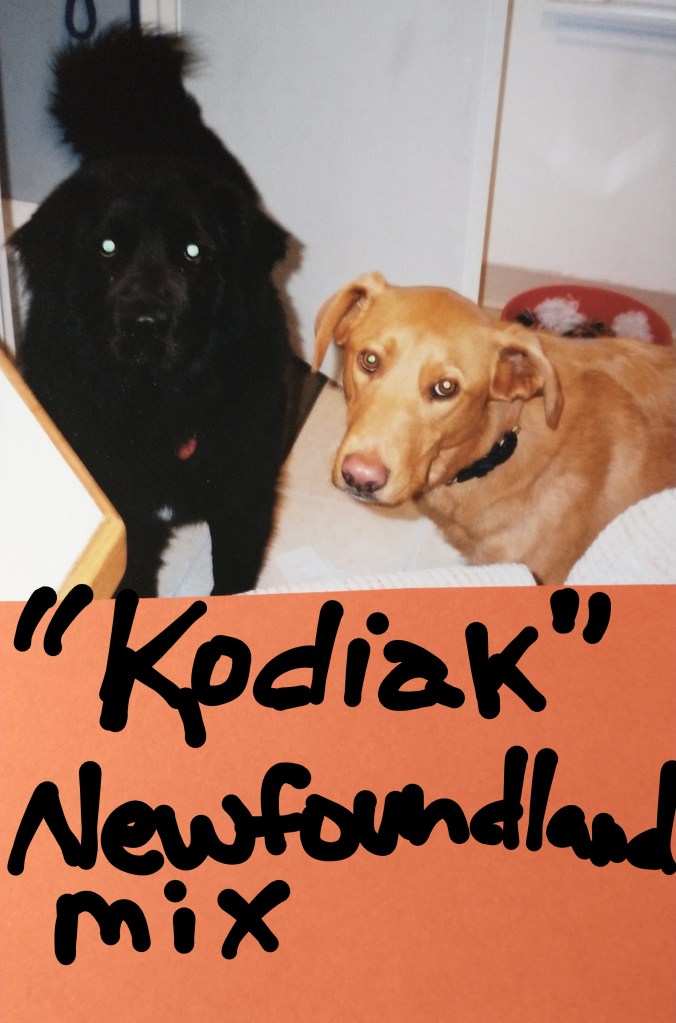
The dog in the second photo is scared, he has the middle of his body curved away, that is to protect his body. His eyes are big & his mouth is stiffly shut & body is tight.
Below are some other body language indicators that a dog is scared of something or someone. Not all will be present (shown) every time or under every circumstance. If the object of their fear moves away then the dog is relieved & no longer may feel the need to continue showing these signals. Lets say you were walking down a street & someone who made you uncomfortable was getting too close. You might move away, cross the street or say back off, you would in some way try to indicate that you were not comfortable with them getting too close to you. Dogs can’t always move away so they use body language to say back off please, but if they don’t listen it can lead to growling (a warning signal), barking (a warning signal) then maybe biting, if all other warnings signals are ignored.

Most dogs won’t bite first & ask questions later, they give off many signals first, but we as humans don’t know this or understand it. It really is helpful to understand more about what our pets are saying to us. Also helpful when meeting a new dog, whether a dog to dog meeting, or human to dog meeting.
Years ago I was helping a friend’s son to properly fit a Gentle Leader on his female Lab mix, who was about 11 months old. I knew she had come from a not so good background & she had some trust issues. I will admit I was over confident & didn’t know what to watch for & I thought her tail was wagging, so I’m good. She was giving me signals, but I didn’t understand them & I got bit on the hand, nothing serious, it could have been a lot worse. She was warning me she wasn’t comfortable with me yet, she needed more time to know she could trust me. We stopped, I cleaned up my wound & we approached it slower letting her owner touch her more than I did & let her feel more comfortable & we fitted her for the Gentle Leader & it all worked out.
Dogs use calming signals to calm themselves down if nervous or fearful, or to prevent things from happening, to avoid threats from others (dog, human, objects, situations or even sounds). Here is some good info below:

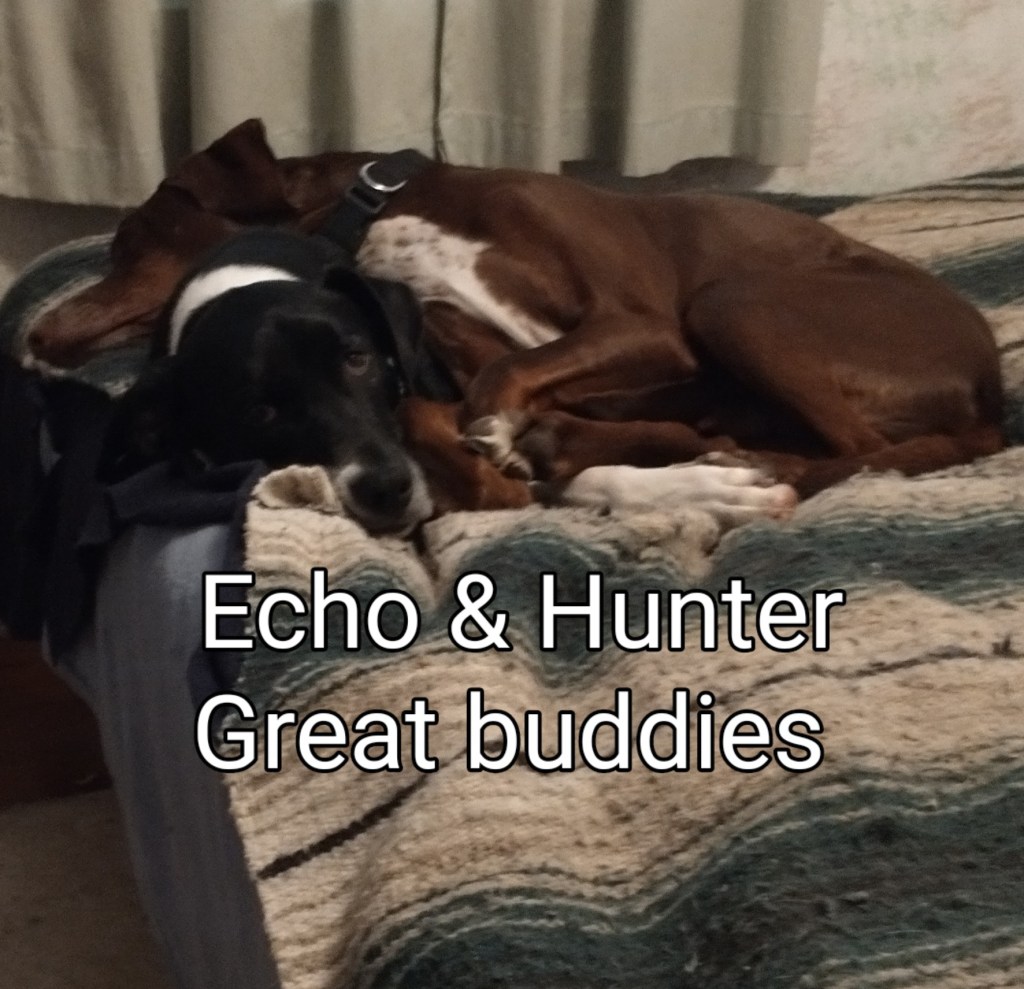
I had a dog who was fearful of the sound of fireworks, so I would yawn while looking at her to help her be calmer, after a few times of me yawning, she would yawn & it helped her settle some. I took my dog Hunter to a concert in the park near our home on Th night & he saw a small dog there he wanted to meet. I could tell the dog was fearful & I’m guessing Hunter could too, Hunter laid down to try & let the dog know he was no threat. It didn’t calm that dog much, they sniffed each other for a couple seconds, but that was it. Hunter backed off & let it go. I found out this little dog goes to a dog park & I am guessing the owner thinks he likes it, I highly doubt it. If when he is at the dog park he shows any of the same signals, he doesn’t like it. Sadly most people don’t know most dogs would prefer to meet their dog friends at home in a private fenced area, on a walk, not at an uncontrolled dog park. Before I knew this I use to take my former dogs to a dog park. Ace would have drool hanging almost to the ground & Sam would have issues with some dogs who approached too fast or too boldly. I still feel bad for that to this day & both dogs have long passed. Before I adopted Echo I would set up play dates for Hunter with a dog friend Pearl & her owner would bring her to my fenced yard. Echo is not strange dog friendly, but did like the dog next door, so they had a few play dates, that dog just passed away recently. Choosing your dog’s friends to interact with is safer & less risky that going to a dog park where you don’t know what dogs will be there.
My dog Sam was with me through so many foster dogs, he was my 5th foster dog & Ace was my 50th foster that I ended up adopting, & I still fostered for years after that. Sam was giving signals & if a foster didn’t pick up on them he might growl a little, nothing serious. I didn’t know, & I would correct him & tell him not to growl, well that back fired on me. He thought no growl so he went straight into going after the dog if it didn’t pick up on the other signals. When I was in class & learned what I had done, I think I said out loud “Oh no, I did that.” I was clueless, so now I am careful to not intervene unless I need to, & I use redirection & not correction.
There are a number of great books out there to help you learn what your dog is trying to say through body language. I had a potential adopter tell me her son who was a dog lover had been bitten several time in his life. I brought a book to the meet & greet to see if any of this resonated with the son who was now about 12 years old now. (it did & they all learned some of the reasons he was bitten). All the books below are books I own on the subject. I am providing a link for you to purchase from Amazon.
1.The book was titled ‘Dog body Language phrasebook (100 ways to read their signals): by Trevor Warner https://amzn.to/45di5Co
2. On Talking Terms with Dogs: Calming Signals by Turid Rugaas https://amzn.to/414g6xQ
3. Decoding Your Dog: by the American College of Veterinary Medicine https://amzn.to/46ege1i
4. The Culture Clash: by Jean Donaldson https://amzn.to/3GyfR7t
5. How to Speak Dog: by Stanley Coren https://amzn.to/4eTv6UY
6. For the Love of a A Dog: by Patricia B McConnell PH .D. https://amzn.to/44ClnPy
7. The Other End of the Leash Patricia B McConnell PH.D. https://amzn.to/4eYqAVb
If our spouses, bosses, or kids came with a manual to better understand them I think we would so appreciate it. Luckily there are experts out there who have written books to help us understand our pets body language better. Understanding what our pet is thinking can help us to bond closer & make life less stressful for our pets & for us. I am always trying to learn more to help my pets live a better life.
I hope this post has gotten your curiosity & interest about what your dog is really trying to communicate to you & those around you (human & animal). They don’t speak our language, they do understand some tones, some of our body language & they learn by repetition. Please check out the above books & purchase some, so you can start to learn how to better communicate with your furry best friend. If my blog is teaching you things, making you think, smile, I would appreciate it if you would please subscribe (you won’t get spam, just an email when I publish a new post). It is also helpful to get the word out there if you like posts, share my blog on your social media sites, tell your friends & family about it, comment on my posts, plus visit often. My goal is to share my 20+ years fostering & pet companionship my whole life with you & to help your pets to thrive & not just survive. I would like to hear where in the world you are reading my blog from, I love that I have readers from all over the world. There are pet lovers all over & we want to learn how to better care & understand our pets. My email is echoinggreatpetcare@gmail.com if you have an idea for a post, have a question. Thanks, Debbie
 Echoing Great Pet Care