
Maintaining our pets weight, no matter the type of pet is up to us as pet owners. They don’t dispense their own food or treats. Our pets are counting on us to feed them properly & be sure they get exercise as well. Now if you’re not a person who can walk your dog daily, then consider hiring a neighbor teenager, a pet sitter or maybe even taking your dog to doggie daycare a couple times a week (if dog friendly of course). My sister’s mother in law was in her 80-90’s & couldn’t physically walk her dog, so she hired a lady to come walk her dog several times a week. You can also play fetch with your dog. Of course dogs are far from the only pet that needs to exercise to maintain a good weight. Cats in my opinion should stay safely inside unless leash trained & will walk on a leash. Cats can be exercised by chasing a string, going after a ball you toss & yes many cats can learn to play fetch. Having a cat tree that requires jumping up & down can help a cat to get exercise. A pet being active in a variety of ways can help maintain a good weight.
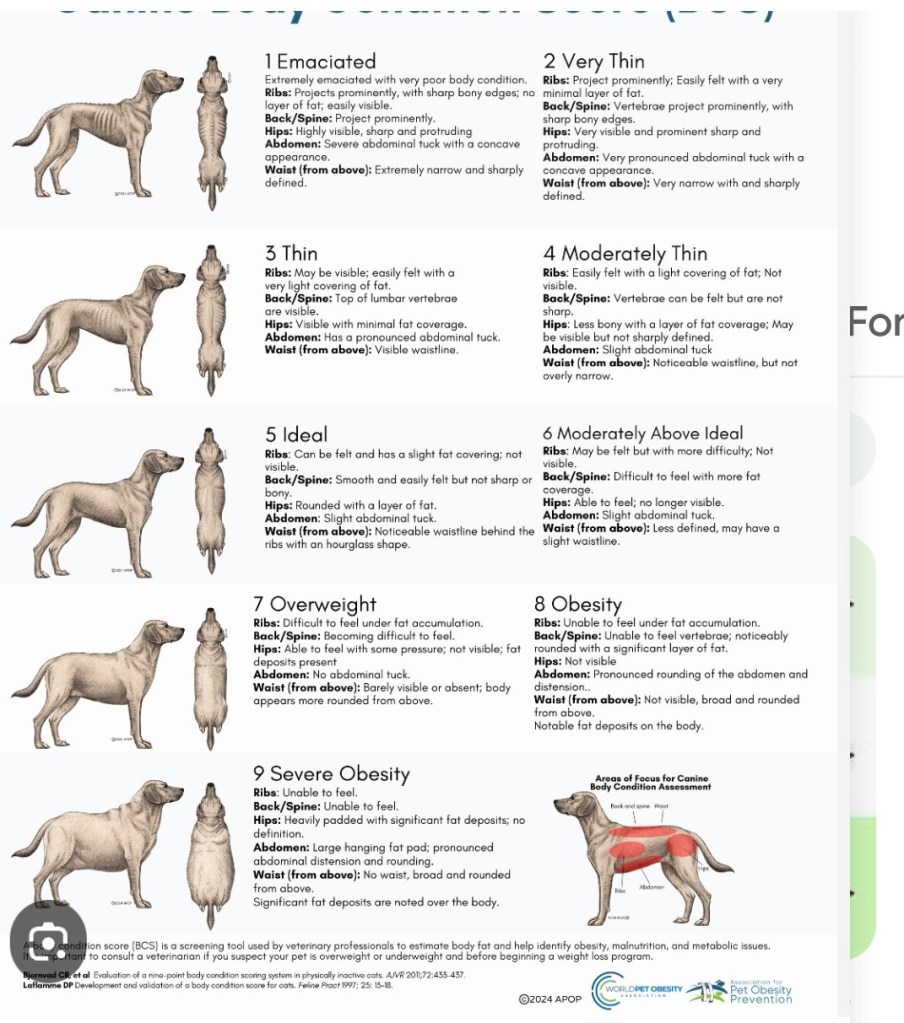
Many of us have seen a chart like the one above, maybe at our pet’s Veterinarian office or some other place. I hope next time you see a chart like this will take the time to really look at it & see where your pet lies on the diagram.
There are so many overweight or obese pets out there that it sadly has become so common place. I think many people have forgotten the health risks of them being overweight or obese has on a pet.
Some of the risks to dogs are:
- Arthritis
- Diabetes
- Heart/respiratory problems
- Higher risk of cancer
- Stress on joints
- Increased complications if need surgery
- Causes heat intolerance
- Lowers immunity: making them more prone to infections
- Poorer quality of life with fat cells causing inflammation that cause discomfort/pain.
- Shorter Life span

Overweight or obese cats are at risk of:
- Higher chance of diabetes
- Painful Osteoarthritis
- Heart disease
- High Blood Pressure
- Liver disease
- Urinary issues
- Respiratory issues
- Skin/coat problems
- Weakened immune system
- Shorter lifespan
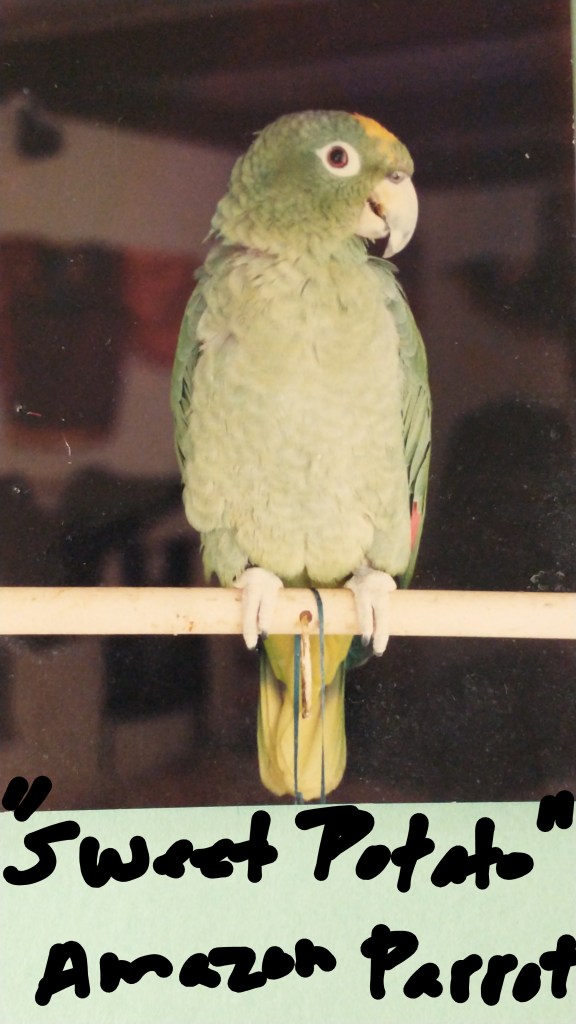
Some risk of being overweight for Birds:
- Fatty liver
- Heart problems
- Respiratory issues
- Joint issues
- Reproductive issues (egg binding etc..)
- Increased anesthesia risk
- Lower quality of life
- Shorter lifespan

Health risk if a rabbit is overweight:
- Arthritis
- Heart disease
- Increased risk of Cancer
- Impaired grooming ability:leading to a dirty bottom which can attract insects (bringing infections) & skin infections.
- Digestive issues
- Urinary problems
- High risk with anesthesia

Health risks to Guinea Pigs:
- Diabetes
- Heart disease
- Arthritis
- Digestive issues stemming from fat accumulating around organs.
- Strained joints leading to lethargy
- Reduced mobility
- Difficulty grooming itself.
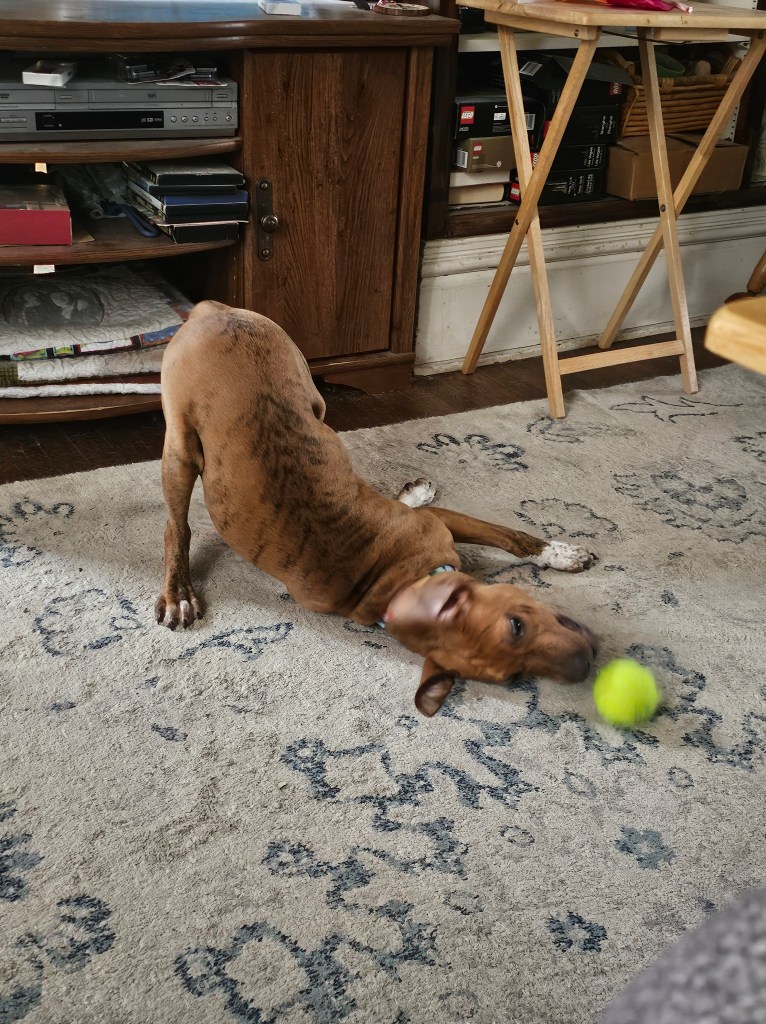
We talked about exercise to help maintain a pet at a healthy weight but there are other things as well (this next part is mainly speaking about dogs & cats) .
- Do not follow the instructions for feeding on the bag of food. The manufacturer wants to to feed more so you will buy more. My rule of thumb for dogs always was 1/2 cup for every 30 lbs a dog should weigh, fed twice a day. (example: if a dog’s healthy weight should be 60 lbs, I would feed 1 cup of food twice a day). If you feed grain-free food as I recommend, then you may need to increase the food a little as there are not all the carbs. If you’re unsure talk to your Vet about it, but know not all Vets have taken extra classes on nutrition, & are taught minimally about it in Vet school.
- Feed a High Quality grain-free diet to your dog, cat, & minimal to your birds. Some manufacturers of certain pet food tried to scare the public about grain-free food. These companies didn’t sell real quality foods nor grain-free & funny that most of them do know (well grain-free, I wouldn’t say quality foods due to lower quality ingredients in them.
- Feed on a schedule 2 times a day & the right portion that is measured out. Free feeding is not going to help your pets digestion or keep weight off, the stomach may never fully digest the food & flora in intestines doesn’t build up which helps in the absorption of nutrients. There are auto-feeders(dispensers) you can buy if you’re not going to be home. If your dog or cat doesn’t finish the food within about 10 mins remove it. Don’t worry they won’t starve themselves & most likely will finish all of it next time in the allotted time frame.
- Fresh water should be available as this is important to help with digestion. If your dog eats fast then you can add a little water to its food & this can help slow them down a little.
- If you reward when your dog goes potty outside or for other things (put a little of your dogs measured portion of food aside & use it at rewards). If you want to feed treats then feed single ingredient treats (meat only)such as dehydrated beef liver. It is a protein & no carbs or sugar.
- Exercise: play fetch, encourage chasing toys, walk your dog(or hire someone to do it for you), there are places you can take your dog swimming (inside when cold or at a lake-be sure water is clean). Some dogs will walk on a tread mill, and can walk your dog around Home improvement stores (many allow dogs). Be creative & keep it fun.
- If your doing all these things & your pet isn’t losing weight, make an appointment with your pets Vet & have a blood panel done & ask them to check the thyroid as well (usually a separate test).
For birds, & other caged pets: they need a good amount of time out of their cages to exercise as well as feed more Vegetables & greens & less seeds or manufactured foods. These are important to help maintain a healthy weight.
I’m sure you recognized that pets can have a lot of the same health issues that humans can if we are overweight. I know you want your pet to live as long as possible so please understand maintaining a healthy weight is so important to increasing a pets longevity.
If you are enjoying & or learning from my blog please help me to spread the word by sharing my blog on your social media sites. Click the like button at the bottom. Email the link to friends or family. Subscribe so you don’t miss a post (it’s free & won’t get spam, just a notice when I publish a new post). My goal is to reach as many pet owners as I can. If you have a question you can email me at echoinggreatpetcare@gmail.com Thanks, Debbie
 Echoing Great Pet Care