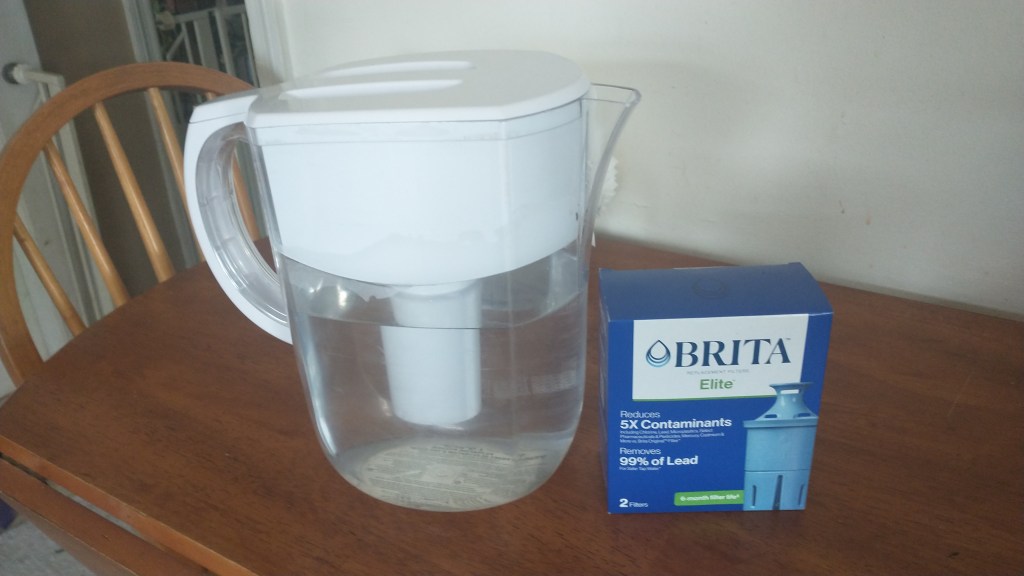
If we have a pet, then we have a water bowl, dish or some type of container that holds water for our pets & often one outside as well if the pet goes outside. Have you ever thought about the water you give your pet to drink. I live in an older home & some of the pipes have been replaced, but not too many years ago the Village where I live replaced water lines in the streets. They informed us that the pipes from the street to the house were our responsibility to be checked & potentially replaced. Sadly it is very expensive & not in my budget. The concern with older pipes is lead, so what was I to do to protect myself & my pets. There are filters you can put on your faucets, there is reverse osmosis, home filter systems & there are pitchers you store in your refrigerator that have filters.
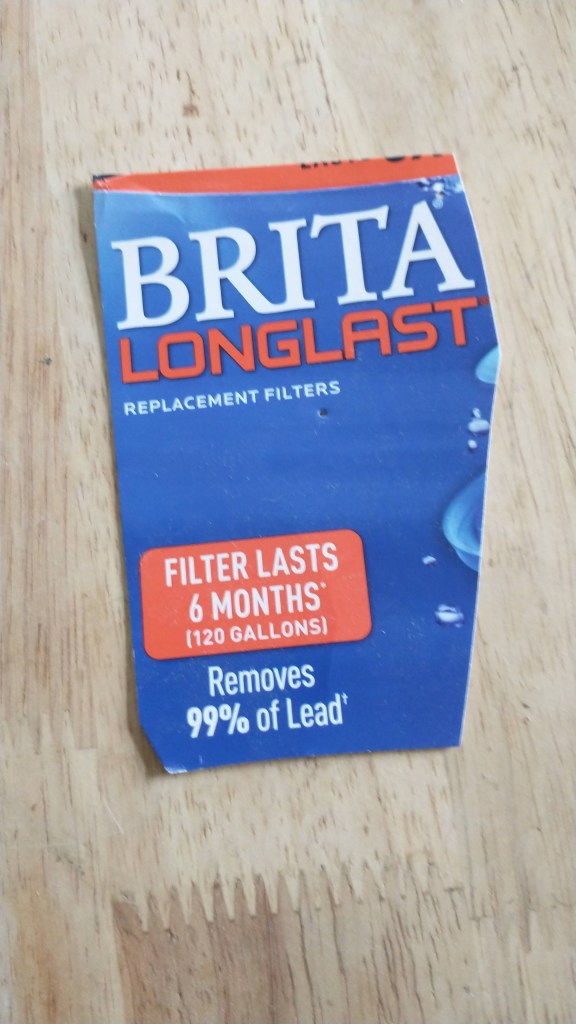
I travel with my dogs so I decided a pitcher was the best option for myself & my dogs. I did not know at first that there were different types of filters for the pitchers that filter differently. The ones that came with my pitcher were not the ones that filtered much lead. I switched as soon as I found out & they state they remove 99% of lead.
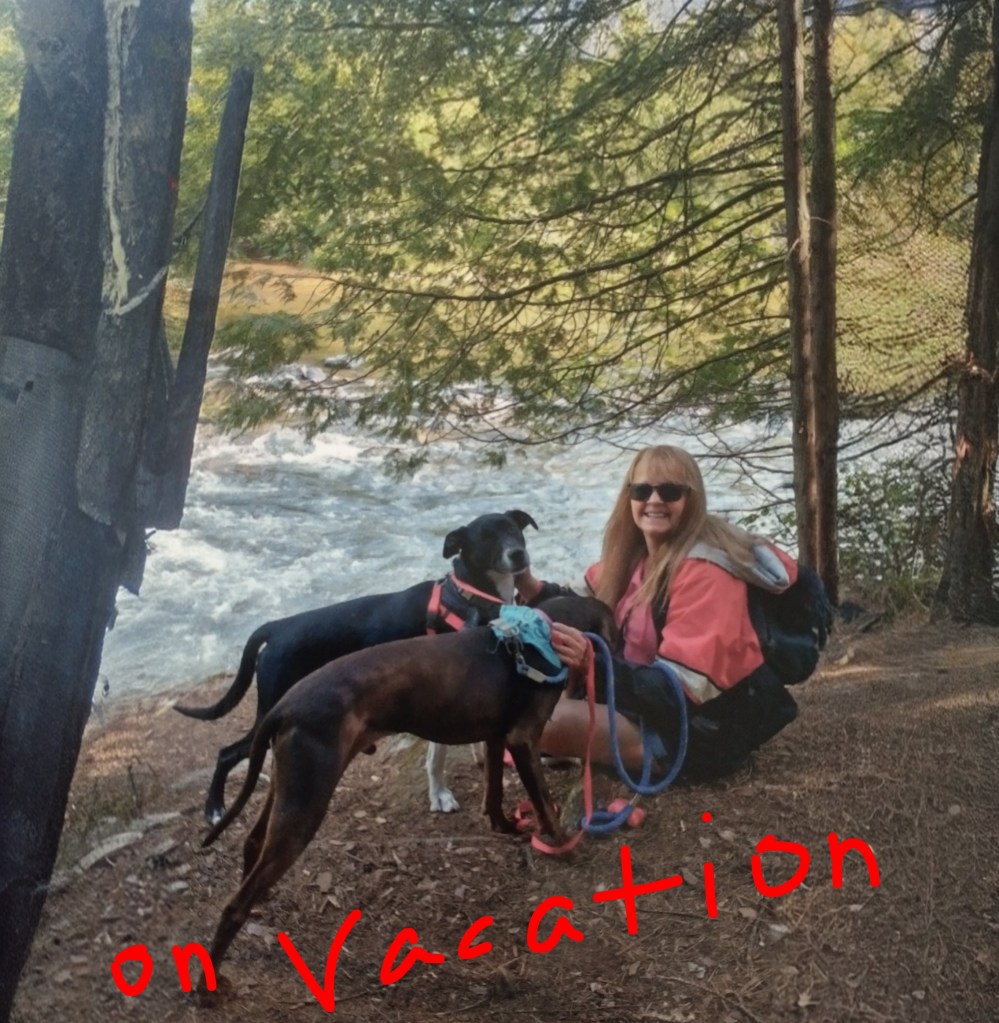
When I go on vacation I usually take one of the pitchers with me, but on my last trip I stayed with a friend so figured I didn’t need it. Whether the water was the cause of Hunter having diarrhea I won’t know, but he has been on 4 other trips with me & never had any issue & nothing else was different. I feed the same food,same treats,& the same chews. I know from now on I will be taking a pitcher & filter on vacations.
No matter what type of pet I have I recommend testing your water or using some type of filtered water for your pets & yourself.
Our Pets need to have clean , cool, clear water available at all times. Water should be given in glass, or ceramic dishes whenever possible. Now with birds & some other small animal this is not always an option, but luckily more & more options are becoming available. Some plastics can release harmful chemicals & microscopic plastic particles that can be ingested & potentially interfere with the body’s natural processes. The risk can be potentially more dangerous from high heat (dish washer) & use over a prolonged period. So if using plastic dishes is your only option, harder plastics are better, but try & replace more often.

Not long after I adopted my dog Hunter my Vet said he is not drinking enough water & I said it is always available. She asked what type of dish I was using & at the time it was a stainless steel bowl & she said some dogs don’t care for the taste from stainless steel. I’m sure she saw a doubting look on my face, so she asked me to do a test: offer water in 3 dishes, stainless steel, ceramic & glass, allowing Hunter to choose which to drink from. I did that & low & behold he picked the glass or ceremic & never drank from the stainless steel. When Echo arrived he decided he liked the ceramic, so I only use ceramic or glass bowls for water now for my dogs.

When I walk my dogs on warmer days, I take water along with me. I have a mesh water bottle holder that has a strap that goes over my shoulder & can go across my body & is adjustable in length. I carry water for me & to share with my dogs on the walk. I have a collapsible silicone water bowl that has a clip, so I can attach it to my belt loop, hip pouch that has treats or to my water bottle carrier.
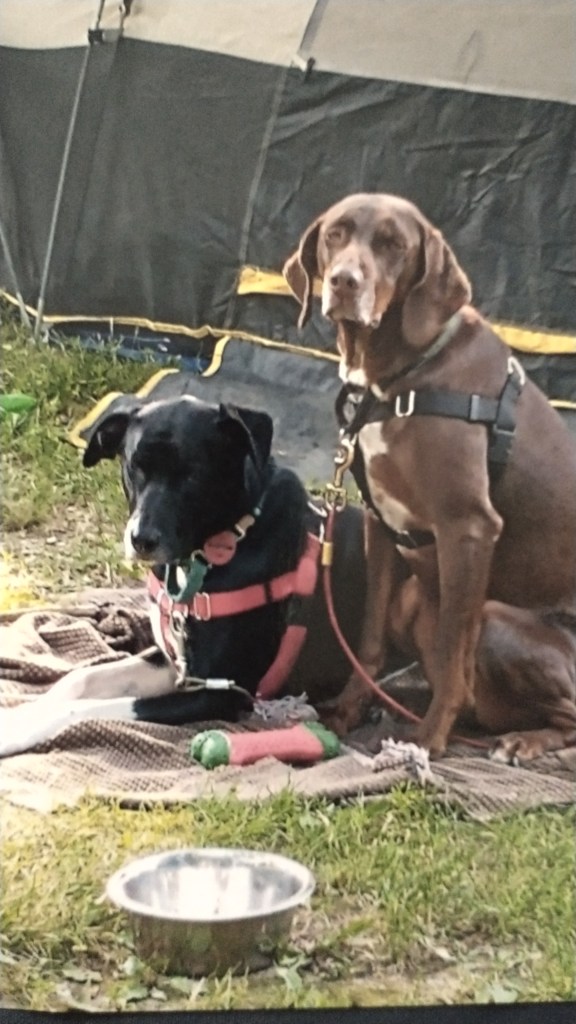
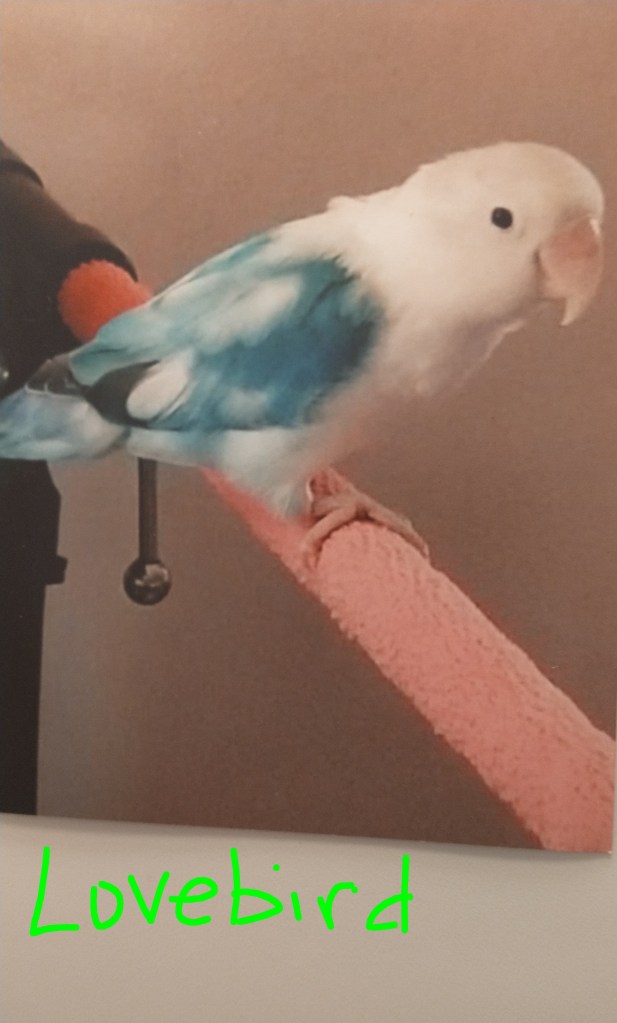
When I camp with my dogs I take enough water in jugs for my dogs for the whole time we will be gone. I always carry extra water bottles for myself & just in case my dogs drink more. Being prepared is so important, better to have more & bring home & use, than to run out. When I travel I leave one pitcher at home in the refrigerator for my pet sitter to use for my birds.
My former dogs Sydney & Sam both loved to swim & would get in any water they could. Sydney even tried to get into a mud puddle when I didn’t let her jump into the lake when she wanted to.
Always check the water before you let your dogs in, it is so important that you check to make sure the water doesn’t have green slime or is murky & most of all free from blue-green algae. Blue-Green algae is highly toxic & can cause liver failure, seizures & death in hours. Avoid stagnant water as this type of body of water has a greater chance of having blue-green algae. If in doubt don’t let them in or near the water.
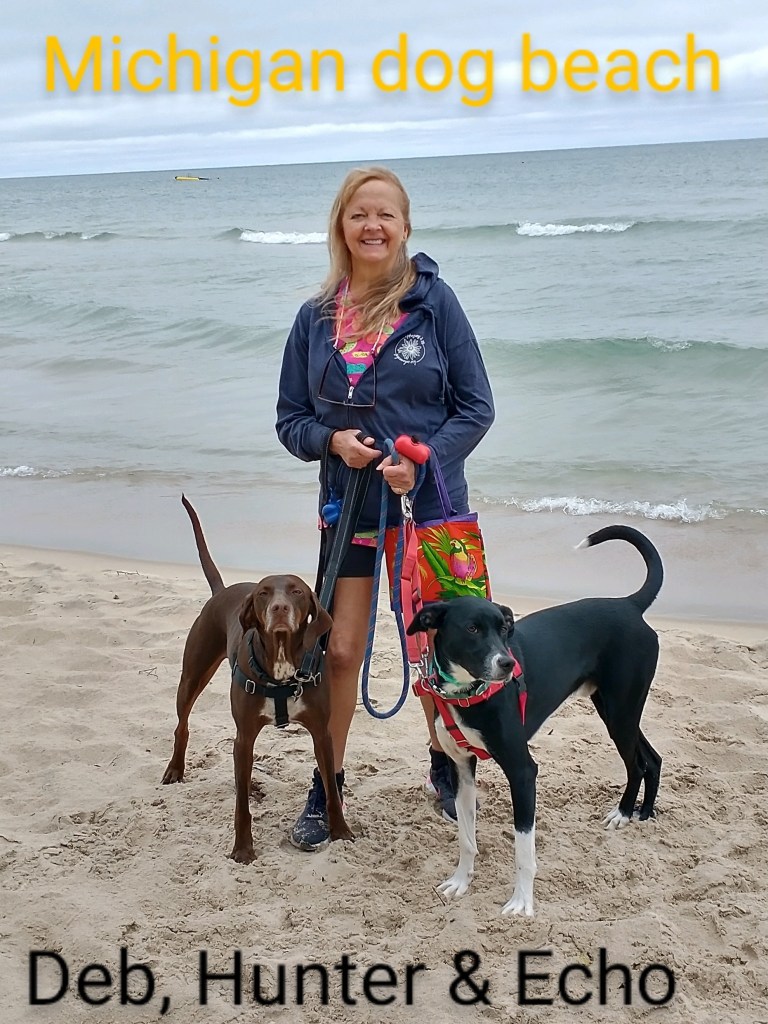
Some areas have designated dog beaches, sadly Echo who likes the water some, was scared of the waves coming up on shore. He did enjoy the beach though, Hunter avoids water at all costs, but was he also was good with the beach. It was cooler when we were there so no concern with hot sand.
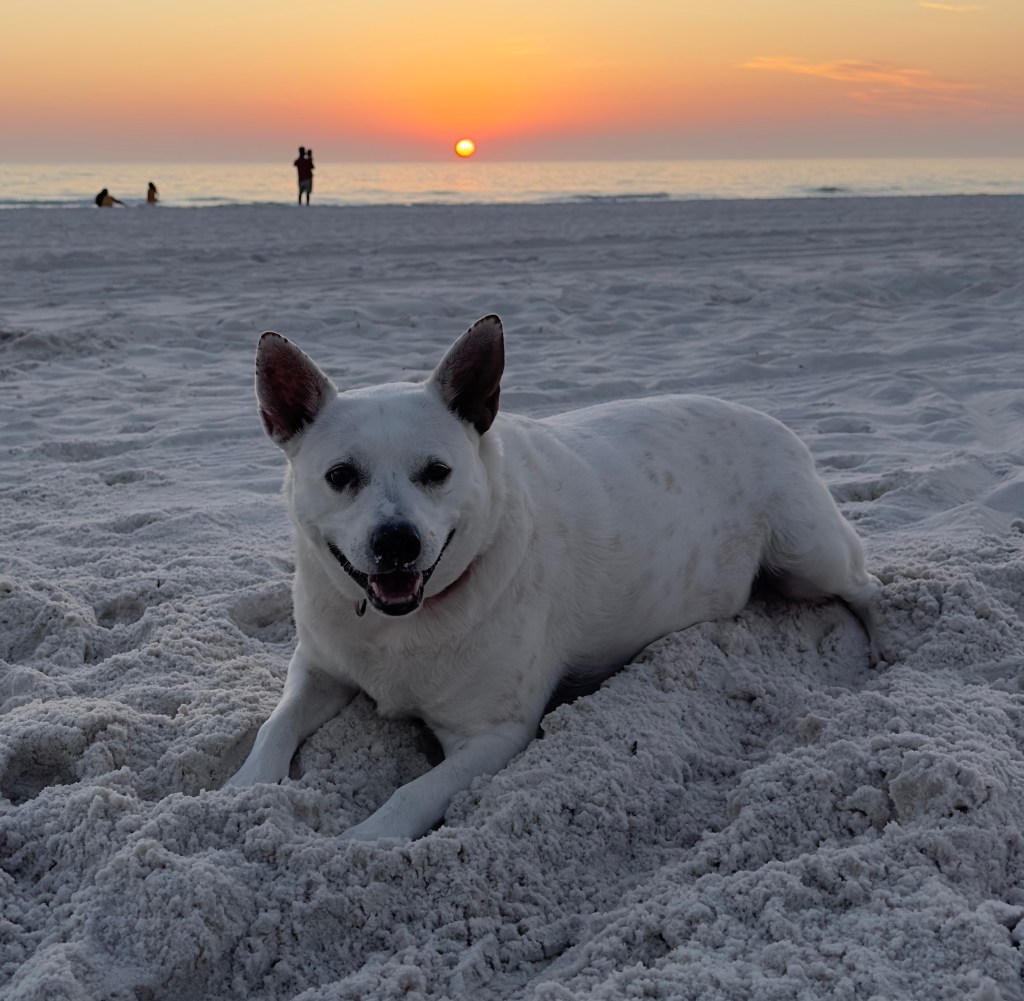
If you take your dog to the ocean where there is salt water, be sure you also have water along for them to drink. Salt water can try you out & not quench their thirst.
I hope this post educated you &/or gave you ideas for your future outings with your dog(s) & water tips in general for all your pets & yourself. The goal of my blog is to help pet owners help make their pets life be the best it can be. I have 20+ years experience fostering a variety of pets & a lifetime of living with pets. I am a researcher when it comes to my passions & pets are a big one for me. If you are enjoying my blog would you please help me to get the word out about my blog, you can do this by liking posts, commenting, visiting my site often & reading my posts, by subscribing to my blog, also by sharing my blog on your social media sites or emailing it to friends. All these things help to get my blog to be seen by more people. I have 115 other published posts on this blog, so if you haven’t checked them out please do. On my home page in the upper left under the show tab you can find the table of contents so you can see a list of all the titles. Then you can go back to the homepage & scroll down the ones you want to read. If you have questions you can email me at echoinggreatpetcare@wordpress.com I appreciate all my subscribers & frequent visitors, thank you, Debbie
 Echoing Great Pet Care