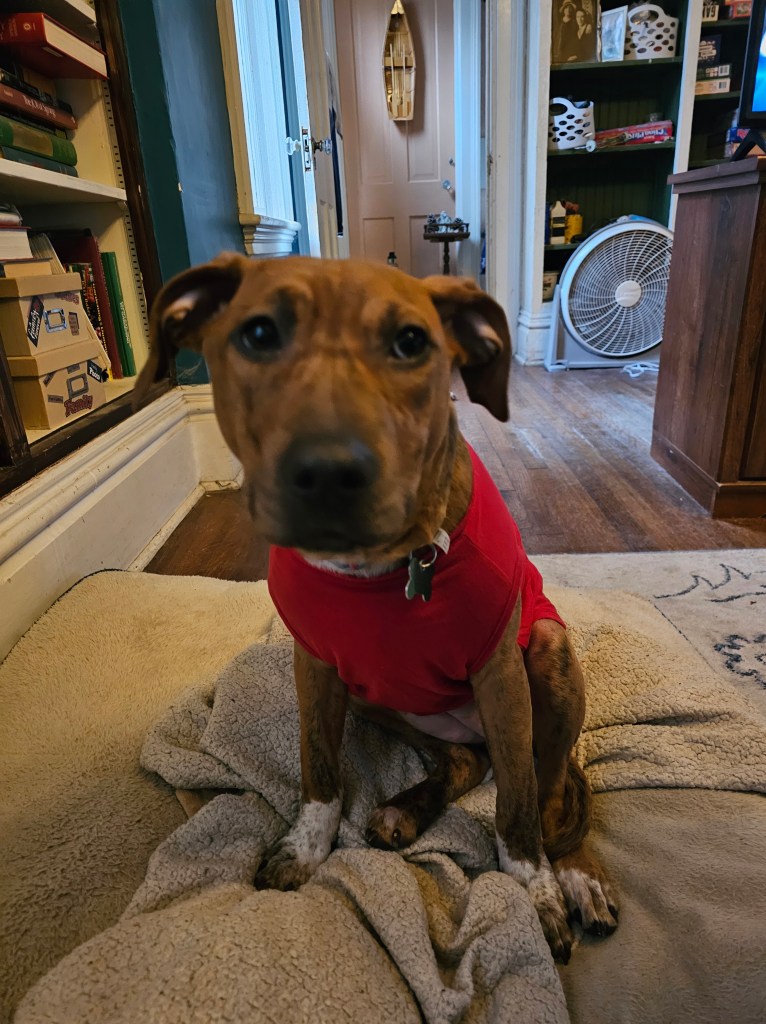
Whether you have a new puppy or adopted an adult dog, accidents in the home are not fun to deal with. I hope to give you a few ideas & things to think about that I hope will help. Puppies usually don’t come potty trained unless you’re extremely blessed. Some adult dogs that are adopted were never house-trained, & some were never allowed in the home & lived outside. No matter the age, a dog can learn to potty outside with proper training & patience. I have fostered dogs that were kept in a basement or a concrete kennel, so they had a hard time not going potty in basements. I gated it off to prevent accidents. I fostered a cattle dog that lived in a basement most of the time for most of its first 9 months of life. I found him a new adoptive home with no basement & no potty issues. This is probably not the norm, but I’ve seen it be an issue.
If you have a dog who starts to go potty in your home & this is out of character or a new thing, the first step is to get your dog to the your Vet for an exam & maybe some tests to rule out a medical issue with the dog.
Some dogs with separation anxiety issues will go potty in the house when left alone or can’t physically get to ‘their human.’
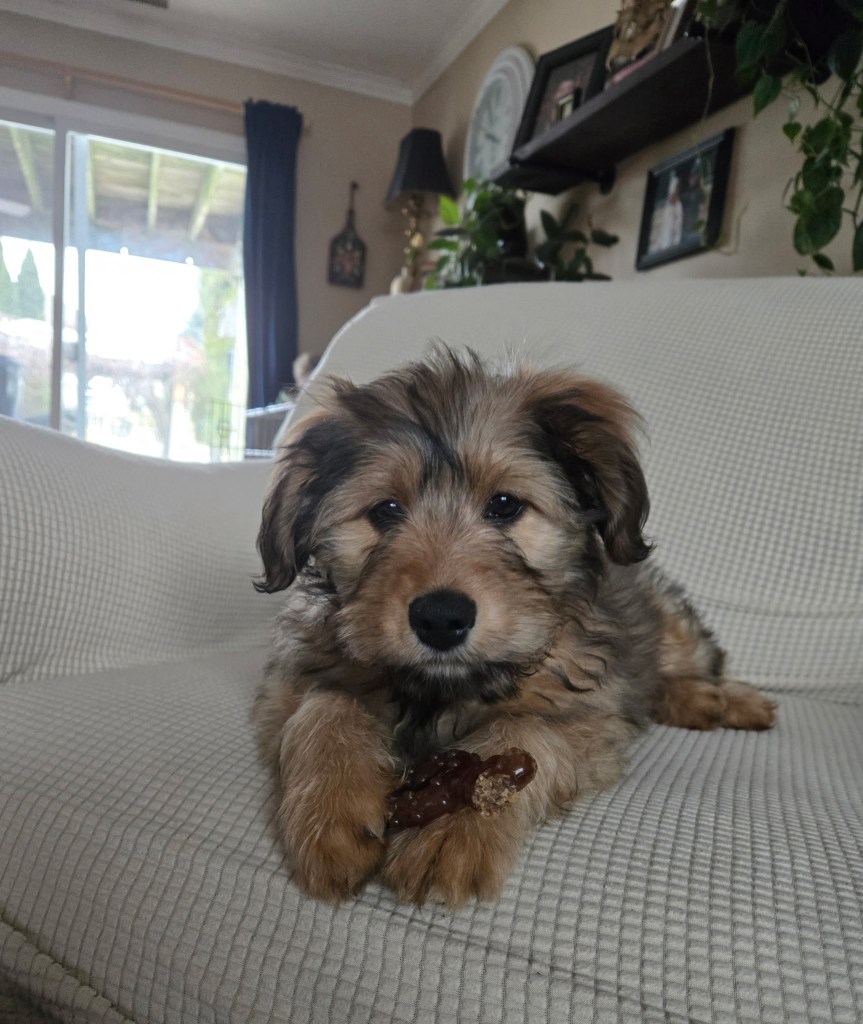
Management & prevention are the two of the biggest things to help with potty accidents. Management is monitoring your dog when in the home & not allowing the dog access to too big of an area until they have gone to the bathroom outside. Something that can help with management are:
- Don’t allow the dog to be out of your site when indoors until you know they are reliably house-trained. You can shut doors, use baby gates, attach a leash to your dog & keep them with you.
- Use a crate when you can’t monitor your dog closely. Crates are an awesome help with training & keeps a dog out of trouble, & gives them a place of their own where nothing bad ever happens in the crate. Need to teach them the crate is a positive zone. A crate should be just large enough for a dog to easily go in turn around & lay down comfortably, not big enough to potty in a corner & lay in a different corner. Most animals won’t potty where they sleep, but we don’t want to set them up to fail, so not too big or too small.
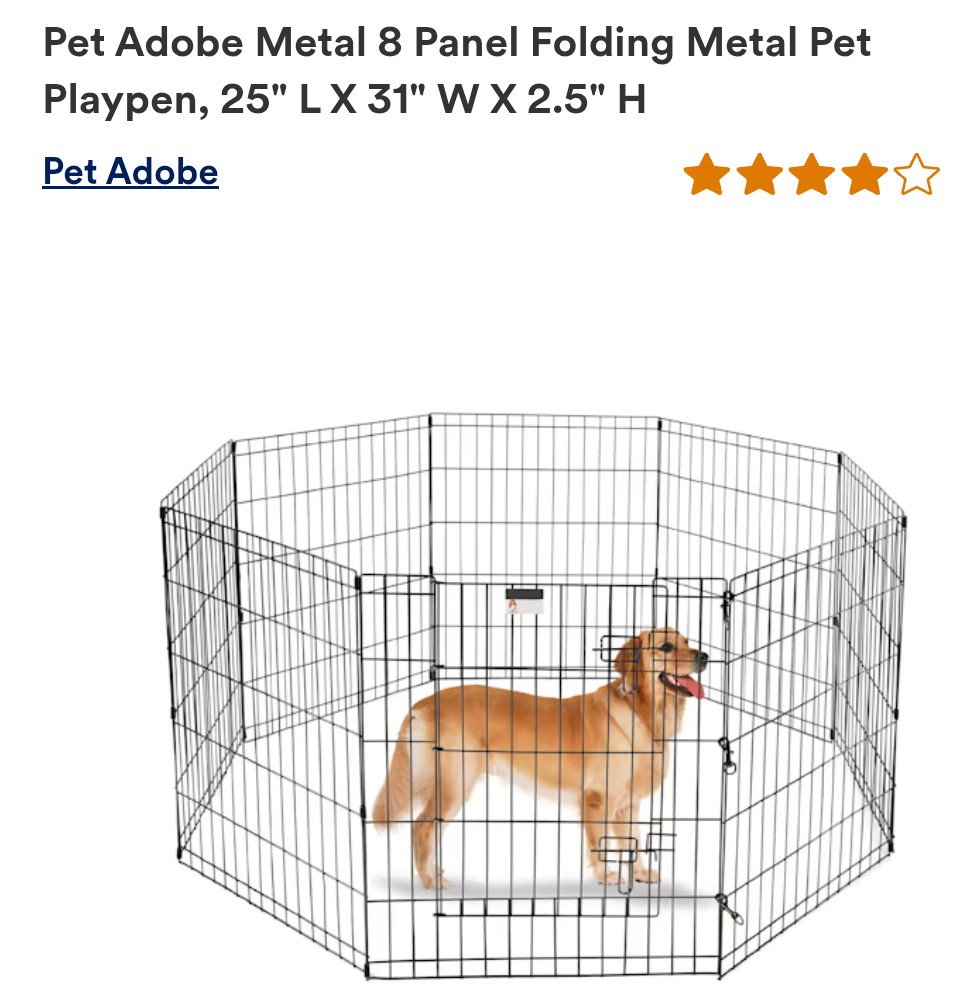
- Use an exercise pen as an alternative to a crate. They give the dog more space, but if you find they potty in the area it may be too big of an area.
- For an adult male dog that mark or urinate in the home a belly band can be a great alternative. It is a wrap that encloses a dog’s privates in the wrap, so if they try & lift to mark, the urine gets trapped in the belly band. These can be great when you take your dog & visit a home with another dog & your dog wants to leave his mark also.
- Don’t increase the freedom till your dog is reliable & not had an accident in a few weeks.
- Write up a journal & keep track of when you dog eats & then when it needs to go out & did it go #1 & #2. You soon will figure out a routine & know when to go out to prevent accidents.
- Feed your dog on a schedule & after 10 mins take up any uneaten food. Your dog will quickly learn I better eat it now or it will go away. I have never had a dog in close to 100 dogs I fostered not getting this concept in 2 days or less.
- Teach your dog to ring bells to go outside, hang them on or near the door & ring it each time you take the dog out to go potty.
When you are monitoring your dog/puppy watch for signs that they need to go outside relieve itself, such as: Circling & smelling the ground, watch for what I call ‘pooch butt’ (their anus gets pooched out more than usual). Some dog will go to the door to outside (use the same door while training, so not to confuse the dog/puppy).
Preventing accidents is a big part of this, we don’t want our dogs to get lots of practice going potty inside, or they will do it more. Accidents will happen & when they do you don’t want to clean them up in front of the dog. The dog will sense your frustration or disgust & next time hide where they potty, like behind the sofa or bed. Be sure & use a cleaning product for pet messes that does not contain ammonia, as this is a strong smelling chemical that can actually attract a dog to urine over it, to them it smells sorta like urine. Some people use pee pads, honestly not a fan, because I don’t want to look at it & I have heard of way too many dogs that will then potty on rugs or similar items.
Being diligent is going to be a big key, as soon as your dog wakes up from a nap or n the AM, you need to take them outside to relieve themselves. When they go potty or even squat or lift their leg to urinate, say “yes” or mark behavior with a click from a clicker & reward. Dogs repeat what they get rewarded for. I don’t recommend you “name” the behavior for a day or two. Then the moment your dog goes potty say a cue word such as “go potty” when your dog starts to go to the bathroom. Then follow up with a “good boy”, “good girl”(which ever applies) & treat. Be sure you are close,which may mean taking your dog out on a leash. You can use a long line, but slowly move closer, so you can reward the minute they finish going potty(don’t delay). I say “go potty” for my dogs to go urinate, which being males was a reward in itself. I say “go dodo” for pooping.

Make sure you don’t punish accidents, if you see them starting to potty, startle them with a noise(so they stop) & immediately get them outside so the dog/puppy can go potty where they should go. It might be a smart idea to carry/wear a treat pouch so you have treats always available while training your dog. High Quality treats are very important, dehydrated beef liver is a great treat, safe, dry so not messy, but smelly enough to satisfy dogs (single ingredients) & loved by every dog I have given it to. It is my dog Echo’s favorite treat.

One more thing make sure your dog is allowed ample opportunities to go out & use the bathroom throughout the day. A puppy that is 3 months old should be taken out at least every 4 hours, a puppy that is 4 months old at least every 5 hours, & a puppy that is 5 month old at least every 6 hours. In my opinion 6-7 hours is a long enough time for any dog to go without being allowed outside to relieve themselves & have some pet time from humans. I like to ask people to think about how many times a day they go potty & engage in conversation with someone.
I suggest if you or someone else in your home can’t be there to let them out during the day that you ask a family member, a neighbor, a friend or hire a dog walker/caretaker, or consider doggie daycare.
I hope you found some useful information in this post & you’re on your way of having a house-trained dog/puppy. I have 123 other posts on pet care & you can find my table of contents on the home page under the “show” tab & then go back to home page & scroll to the posts you would like to read. My goal is to reach as many pet owners as I can & share my 20+ years fostering pet. Allowing readers to learn so more pets can thrive & not just survive. You can help me spread the word is a few ways: Visit often, subscribe to my blog, tell others about my blog, share my blog on your social media platforms. Comment, Click the like button which is located at the end of each post. If you have a question feel free to reach out to me a echoinggreatpetcare@gmail.com Thank you, Debbie
 Echoing Great Pet Care